What is DNS Latency?

Why DNS Speed Matters for Every Connection

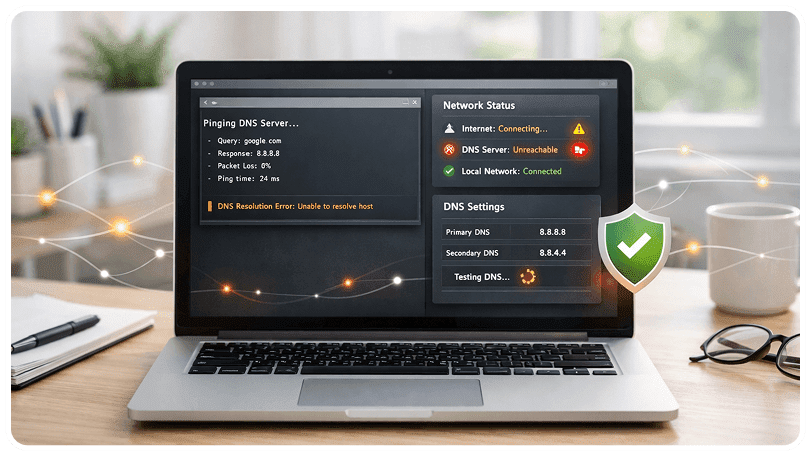
DNS latency is the time it takes for a DNS resolver to respond to a query. Since every website visit, app connection, and API call starts with a DNS lookup, even small increases in DNS latency affect overall performance.

Try CleanBrowsing's Fast DNS

Step 1: What is DNS Latency?

DNS latency is the time delay between your device sending a DNS query and receiving the response — typically measured in milliseconds (ms). A typical DNS resolution takes between 10–100ms depending on the resolver and network conditions.

Every new domain your browser encounters requires a DNS lookup before any data can load. A page with resources from 20 different domains means 20 DNS lookups. High DNS latency compounds across all of these, noticeably slowing down page loads.

DNS caching (at the browser, OS, and router levels) helps by storing recent lookups for the duration specified by the domain's TTL, but first-time lookups always incur the full latency cost.

Step 2: What Affects DNS Latency

  • Geographic distance: The farther your device is from the DNS resolver, the higher the latency due to speed-of-light limitations in network cables and fiber
  • Resolver load: Overloaded DNS servers respond more slowly. Well-provisioned resolvers maintain low latency under high query volumes
  • Network path: Internet routing determines how many hops your query takes to reach the resolver — more hops mean more latency
  • Cache hit rate: Cached responses are nearly instant. Popular domains have high cache hit rates; obscure domains require full recursive lookups
  • Encryption overhead: Encrypted DNS (DoH/DoT) adds a small latency overhead for the TLS handshake, typically 5–15ms on first connection

Step 3: How Anycast Reduces Latency

CleanBrowsing uses an anycast network architecture across 70+ global data centers. With anycast, the same DNS resolver IP address (e.g., 185.228.168.168) is announced from multiple locations worldwide.

When your device sends a DNS query, internet routing automatically directs it to the nearest CleanBrowsing node — minimizing the geographic distance and reducing latency to single-digit milliseconds for most users.

For website owners looking to reduce latency on the server side, NOC.org provides CDN and authoritative DNS services with similar anycast architectures — optimizing both the DNS lookup and content delivery.

Step 4: Measuring DNS Performance

You can measure DNS latency using command-line tools:

  • dig: dig @185.228.168.168 example.com — shows query time in the response
  • nslookup: Available on Windows and macOS for quick lookups
  • Command-line DNS tools: Our guide covers dig, nslookup, and Resolve-DnsName for detailed DNS diagnostics

Aim for consistent DNS response times under 30ms. If you're seeing higher latency, check that your network is routing to the nearest CleanBrowsing anycast node and that local DNS caching is working correctly.

Experience fast, filtered DNS resolution

Try CleanBrowsing's Fast DNS