Services That Conflict with DNS Filtering (And How to Fix Them)
Some ISP routers, security software, and mesh systems override or interfere with custom DNS settings. This guide covers the most common conflicts and provides a workaround for each one.

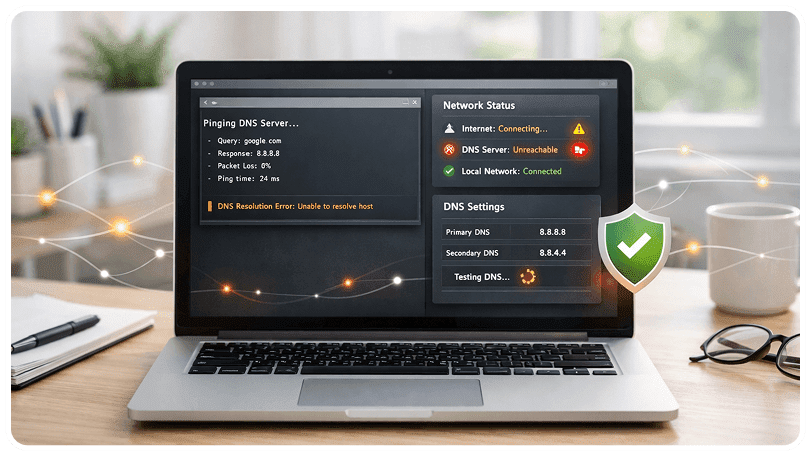
Some ISP routers, security software, and mesh systems override or interfere with custom DNS settings. This guide covers the most common conflicts and provides a workaround for each one.
Comcast's xFi Advanced Security feature hijacks DNS queries and routes them through Comcast's own resolvers, regardless of what DNS servers you have configured. This means even if you set CleanBrowsing DNS on your router, Comcast silently overrides it.
Run a DNS verification test. If you see Comcast/Xfinity DNS servers instead of CleanBrowsing IPs (185.228.168.x), xFi Advanced Security is intercepting your DNS.
Avast antivirus (and AVG, which uses the same engine) includes a "Real Site" feature that intercepts all DNS queries through its own DNS proxy. This is designed to protect against phishing by verifying DNS responses, but it completely overrides any custom DNS configuration including CleanBrowsing.
If CleanBrowsing works on devices without Avast but not on devices with Avast installed, the Real Site feature is likely the cause.
Disable Real Site in Avast settings:
Note: Disabling Real Site does not significantly reduce your security if you are already using CleanBrowsing's Security or Family filter, which blocks phishing domains at the DNS level.
Many AT&T gateway routers (especially the BGW210, BGW320, and Pace 5268AC) do not allow custom DNS settings, or they silently override DNS changes you make in the router admin panel. AT&T routes DNS through their own resolvers as part of their network management.
Amazon's Eero mesh routers offer an optional "Eero Secure" (formerly Eero Secure+) subscription that includes content filtering and ad blocking. When active, Eero Secure tunnels all DNS traffic through Eero's own filtering infrastructure, completely overriding any custom DNS settings.
Note: Eero Secure and CleanBrowsing cannot coexist. You must choose one or the other for DNS-based filtering. CleanBrowsing offers significantly more granular filtering categories and customization than Eero Secure.
T-Mobile Home Internet presents a unique challenge: it blocks DNS-over-HTTPS (DoH) connections on their network. Standard DNS (port 53) works normally, and DNS-over-TLS (DoT) also works as an alternative.
cleanbrowsing.org on port 853. DoT is not blocked by T-Mobile.T-Mobile also uses CGNAT (Carrier-Grade NAT), which means you share a public IP with other T-Mobile customers. This can affect IP-based DNS filtering. Use CleanBrowsing's DNS profiles with DoT authentication instead of IP-based binding.
Get expert help to quickly identify and resolve DNS filtering issues.
 Contact Support