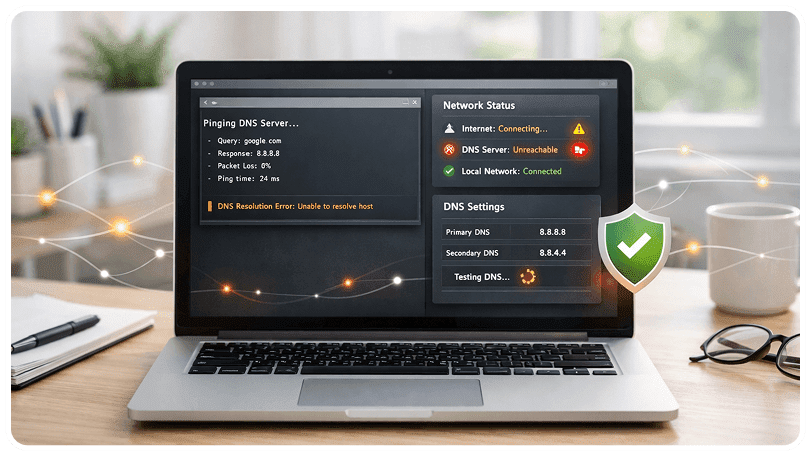
DNS stands for Domain Name System — the internet's phonebook. It translates human-readable domain names like google.com into IP addresses that computers use to communicate. Understanding DNS is the first step to understanding how content filtering works.
Explore Our Free DNS Filters
DNS stands for Domain Name System (sometimes referred to as Domain Name Server, which is a component of the system). It is the technology responsible for translating human-friendly domain names into the numerical IP addresses that computers need to locate and communicate with each other on the internet.
Think of it like a phonebook. Just as a phonebook converts a person's name into their phone number, DNS converts a domain name into an IP address. For example, when you type cleanbrowsing.org into your browser, DNS translates that into the IP address 185.228.168.168, which is the actual address your computer uses to reach the CleanBrowsing server.
Without DNS, you would need to memorize long strings of numbers for every website you want to visit. DNS makes the internet usable by letting us work with memorable names instead of numerical addresses.
When you type a URL into your browser, a process called DNS resolution takes place behind the scenes. This process typically completes in milliseconds and is entirely transparent to the user. Here is how it works:
This entire chain of lookups happens in milliseconds. The resolver then caches the result so that future queries for the same domain are answered instantly, without repeating the full lookup process.
DNS is foundational to virtually all internet activity. Every time you visit a website, open an app, send an email, or stream a video, a DNS lookup occurs first. Without DNS, none of these activities would work as seamlessly as they do.
Because every internet connection begins with a DNS query, DNS serves as the ideal control point for both security and content filtering. If you can control DNS, you can control what domains are accessible on your network — before any content ever loads.
DNS also plays a critical role in security. Malicious websites, phishing domains, and malware command-and-control servers all rely on DNS to function. By filtering DNS queries, you can block threats at the earliest possible stage of a connection, before any harmful content reaches your devices.
This is why organizations, schools, and families increasingly rely on DNS-based solutions to manage internet access and protect their networks.
By using a filtering DNS resolver like CleanBrowsing, every DNS query your devices make is checked against a categorization database before the connection is established. If the domain is associated with unwanted content — such as adult material, malware, or phishing — the resolver blocks the request and the website never loads.
This is the core principle behind DNS filtering. It requires no software installation on individual devices. You simply change the DNS resolver your network uses (either at the router level or on individual devices), and all DNS queries are automatically filtered.
To learn more about how DNS filtering works in detail, visit our guide on What is DNS Filtering?. If you are ready to try it, CleanBrowsing offers three free DNS filters that you can set up in minutes.