How to Diagnose a DNS Resolution Issue
A page loads but the video won't play? Embedded content is missing? This guide walks you through identifying and resolving DNS filtering issues when content partially fails to load.
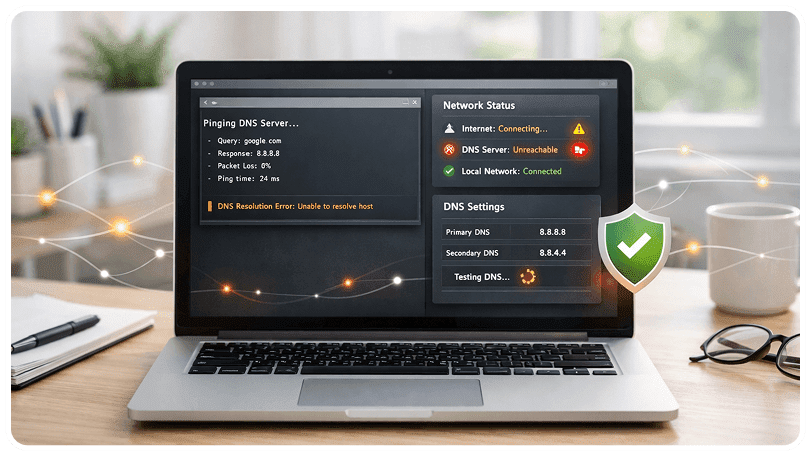
A page loads but the video won't play? Embedded content is missing? This guide walks you through identifying and resolving DNS filtering issues when content partially fails to load.
Before diving into technical debugging, confirm that DNS filtering is actually responsible for the issue:
Streaming platforms and websites often load content from third-party CDNs, video hosts, or ad networks. The main page loads because the primary domain isn't blocked, but embedded media fails because a secondary domain (the CDN, video host, or analytics provider) is being filtered.
This is especially common with:
The browser's built-in developer tools show exactly which domains are being loaded and which are failing.
Note the domain name in the failed request — this is the domain you may need to whitelist. It may not match the website's main domain.
For a deeper walkthrough, see our Debug with Browser DevTools guide.
If you have a paid CleanBrowsing account, the dashboard shows exactly which domains are being blocked.
The blocked requests log shows the domain, the category it was blocked under, and the timestamp. This confirms whether CleanBrowsing is responsible and which category rule triggered the block.
Once you've identified the blocked domain, add it to your whitelist:
cdn.videohost.com).The content should now load. If it still fails, there may be additional domains being blocked — repeat Steps 2-4 to identify them.
For technical users, command-line tools provide deeper visibility into DNS resolution. See our Command-Line DNS Tools guide for full details.
Use verbose output to see initial connections and redirects:
# macOS / Linux
curl -v https://example.com 2>&1 | head -30

# Windows (PowerShell)
Invoke-WebRequest -Uri "https://example.com" -Verbose# Using dig (macOS / Linux)
dig @185.228.168.168 cdn.videohost.com
# Using nslookup (Windows)
nslookup cdn.videohost.com 185.228.168.168
# Using PowerShell
Resolve-DnsName -Name cdn.videohost.com -Server 185.228.168.168If the domain returns NXDOMAIN or a block page IP when queried through CleanBrowsing but resolves normally through another DNS (like 8.8.8.8), CleanBrowsing is filtering that domain.
Monitor all DNS queries in real time while loading the page:
# macOS / Linux — capture DNS traffic
sudo tcpdump -i any port 53 -l

# With tshark (Wireshark CLI)
sudo tshark -i any -f "port 53" -Y "dns.flags.response == 0"
Load the problematic page while the capture is running. The output shows every domain your browser is trying to resolve, making it easy to spot the failing ones.
If you can't resolve any domain through CleanBrowsing — not even cleanbrowsing.org — the issue isn't filtering. Your network can't reach our resolvers. This is different from a domain being blocked.
# Windows
nslookup cleanbrowsing.org 185.228.168.168

# macOS / Linux
dig @185.228.168.168 cleanbrowsing.org
If this times out or returns no response, your connection to our DNS servers is being blocked somewhere.
# Windows
tracert 185.228.168.94

# macOS / Linux
traceroute 185.228.168.94
This shows where the connection drops — whether at your firewall, your ISP, or in transit.
Visit /dnsleaktest and share the results link. It captures your public IP, resolver info, and device type — everything we need to check for routing issues on our end.
185.228.168.168 and 185.228.169.168.If you've confirmed you can't reach our resolvers, email support@cleanbrowsing.org with your traceroute output and leak test results.
Streaming platforms (YouTube, Vimeo, educational video hosts) often load videos from CDN domains that differ from the main site. The Family filter may block mixed-content CDNs. Check for blocked domains ending in common CDN patterns like *.akamaized.net, *.cloudfront.net, or platform-specific video hosts.
If embedded tweets, Instagram posts, or Facebook content doesn't appear, the social media domain may be blocked by a category filter. Whitelist the specific embed domain (e.g., platform.twitter.com) rather than the entire social media site.
This often indicates blocked analytics or tracking domains. The page works but waits for timeouts on blocked resources. These usually resolve on their own after the browser times out — no action needed unless it causes significant delays.
Some login systems use third-party identity providers (Google, Microsoft, Okta). If the identity provider's domain is blocked, authentication fails. Check for blocked domains related to *.auth0.com, *.okta.com, or login.microsoftonline.com.