Debug DNS on Google ChromeBook
Google Chromebooks use ChromeOS, which lacks standard networking utilities like nslookup and dig. This guide shows you how to install Linux and the required tools to debug DNS on your Chromebook.
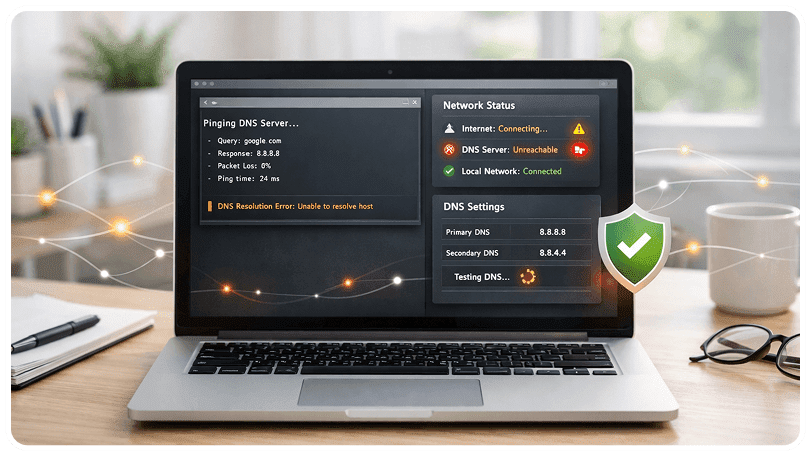
Google Chromebooks use ChromeOS, which lacks standard networking utilities like nslookup and dig. This guide shows you how to install Linux and the required tools to debug DNS on your Chromebook.
Chromebooks now support Linux (Beta), which gives you access to a full terminal with standard networking tools.
The default Linux installation is a minimal (vanilla) install, meaning it does not include networking tools like nslookup or dig. You need to install them manually.
Switch to the root user and install the required packages:
sudo su -
apt-get update
apt-get install dnsutils -y
This installs the dnsutils package, which includes nslookup, dig, and other DNS troubleshooting tools.
Once the tools are installed, you can verify your CleanBrowsing DNS configuration by running:
nslookup -type=txt iptest.whois.dnscontest.cleanbrowsing.org 185.228.168.10This will show you which CleanBrowsing filter is currently active. You can also run nslookup -type=TXT mylocation.whois.dnscontest.cleanbrowsing.org 185.228.168.10 to check the server location.
You can also test if a specific domain is being blocked:
nslookup example-blocked-site.com 185.228.168.168And use dig for more detailed DNS information:
dig @185.228.168.168 example.comAnswers to frequently asked questions and fixes.
Clear DNS cache on Windows, macOS, and Linux.
Universal guide for configuring DNS on most routers.

 Troubleshooting Guide